.svg)

.svg)

This week’s Verizon outage was a sobering reminder of just how interconnected modern operations...
SCOTUS Just Changed Freight Brokerage Forever
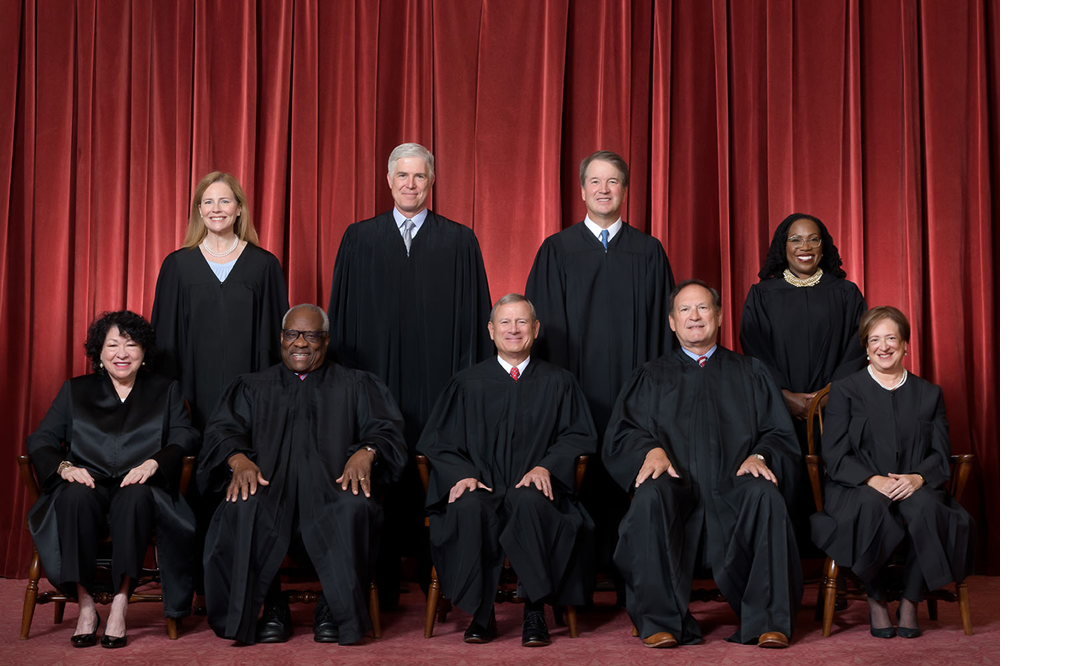
Why the 9–0 C.H. Robinson Decision Could Reshape Freight
On May 14, 2026, the U.S. Supreme Court delivered one of the most consequential transportation rulings in decades.
In a unanimous 9–0 decision in Montgomery v. Caribe Transport II, LLC, the Court ruled that freight brokers like C.H. Robinson can be sued under state negligent hiring laws when the carriers they select are involved in catastrophic crashes.
For years, much of the brokerage industry relied on federal preemption under the Federal Aviation Administration Authorization Act (FAAAA) as a shield against these claims.
That shield just weakened significantly.
And the implications extend far beyond a single lawsuit.
What Changed?
The case stemmed from a 2017 crash involving a carrier selected by C.H. Robinson. The plaintiff argued that the broker negligently hired a carrier with known safety concerns.
C.H. Robinson argued that federal law preempted state negligence claims against brokers.
The Supreme Court disagreed.
Justice Amy Coney Barrett, writing for the unanimous Court, held that the FAAAA’s “safety exception” preserves the ability of states to regulate safety-related claims involving motor vehicles, including negligent hiring claims against freight brokers.
In practical terms, brokers may now face direct liability exposure if they select unsafe carriers.
Why This Is a Major Industry Shift
Historically, the brokerage model depended on a legal distinction:
- Brokers arrange transportation
- Carriers physically move freight
That separation historically insulated brokers from many accident-related liabilities.
This ruling compresses that separation.
The Court effectively signaled that carrier selection itself is a safety-sensitive operational function.
That means the question in future litigation may no longer be:
“Did the carrier have authority?”
Instead, it may become:
“Why did you choose this carrier?”
That is an entirely different operational and legal standard.
The Industry Is Entering the “Prove It” Era
This decision will likely force brokers to demonstrate - and not simply assume - that their carrier vetting practices are reasonable, consistent, and defensible.
Expect increased scrutiny around:
- Carrier onboarding
- FMCSA monitoring
- Insurance verification
- Driver qualification reviews
- Safety scoring methodologies
- Internal compliance workflows
- Documentation and audit trails
For many brokerages, “good enough” compliance may no longer be sufficient.
Small Carriers Could Feel the Pressure
One of the biggest downstream impacts may fall on smaller carriers and owner-operators.
As brokers attempt to reduce litigation exposure, many may increasingly favor:
- Larger fleets
- Digitally mature carriers
- Carriers with strong telematics programs
- Carriers with extensive safety documentation
- Fleets with more verifiable operational data
That could unintentionally accelerate consolidation across trucking.
Not necessarily because large carriers are safer, but because they may be easier to defend in court.
Nuclear Verdict Exposure Just Moved Upstream
Plaintiff attorneys have historically targeted carriers in catastrophic accident cases.
Now brokers themselves may become primary litigation targets because they:
- Influence carrier selection
- Maintain extensive digital communication records
- Often possess larger insurance structures
- Have deeper operational data trails
Expect negligent hiring claims against brokers to increase substantially.
Insurance and Compliance Costs Could Surge
If broker liability expands materially, insurers will likely reprice risk across the brokerage sector.
Potential outcomes may include:
- Higher premiums
- Stricter underwriting requirements
- Expanded compliance audits
- Mandatory safety documentation standards
- Reduced coverage flexibility
Smaller brokerages operating on thin margins may struggle to absorb the added burden.
Why Technology Suddenly Matters More Than Ever
This ruling could accelerate demand for freight technology platforms capable of creating verifiable operational accountability.
The industry may increasingly require systems that can prove:
- Who authenticated the driver
- Whether the pickup was legitimate
- What safety data was reviewed
- Why a carrier was selected
- Whether operational red flags existed
- How custody and identity were validated throughout the shipment lifecycle
This is where digital freight workflow platforms become strategically important.
Solutions like Aquatio's AI-powered Chain of Custody for Freight Execution are uniquely aligned with the direction the industry may now be heading.
As liability shifts upstream, technologies centered around the following:
- Driver authentication
- Pickup validation
- Geofenced workflow verification
- Timebound QR-code exchanges
- Digital chain-of-custody tracking
- eBoL digitization
- Real-time operational visibility
...may evolve from operational efficiencies into legal risk-mitigation infrastructure.
In a post-ruling environment, the ability to verify that the correct driver arrived at the correct facility, under the correct authority, with authenticated shipment legitimacy, could become enormously valuable.
The future freight stack may increasingly revolve around provable operational diligence.
What Shippers Should Be Watching
Large shippers will likely begin reevaluating:
- Broker selection standards
- Carrier compliance visibility
- Risk management procedures
- Digital audit capabilities
- Operational authentication workflows
Enterprise procurement teams may increasingly ask:
“How defensible is this broker’s carrier selection and shipment validation process?”
That question may now become central to transportation procurement.
Final Thought
For decades, freight brokerage scaled around speed and transactional efficiency.
After this ruling, the industry may increasingly need to scale around defensibility.
The winners in the next era of freight may not simply be the brokers who move the most loads.
They may be the organizations that can best prove with data, authentication, visibility, and workflow accountability, that they made safe and legitimate operational decisions before the truck ever hit the road.
Sources:
- AP News coverage of the decision
- Supreme Court opinion in Montgomery v. Caribe Transport II, LLC
- Transportation industry legal analysis and market reaction published May 14, 2026